New Studies by the EDB and International Organizations: Central Asian Energy, Climate Adaptation Financing, and AI in Development Banks.
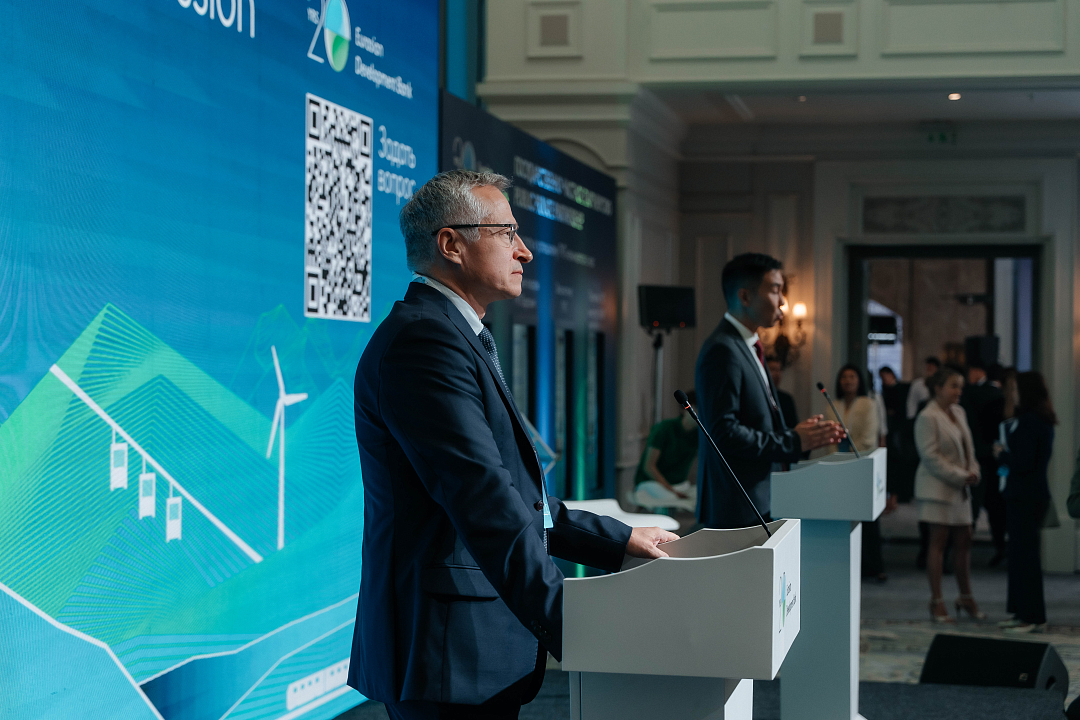
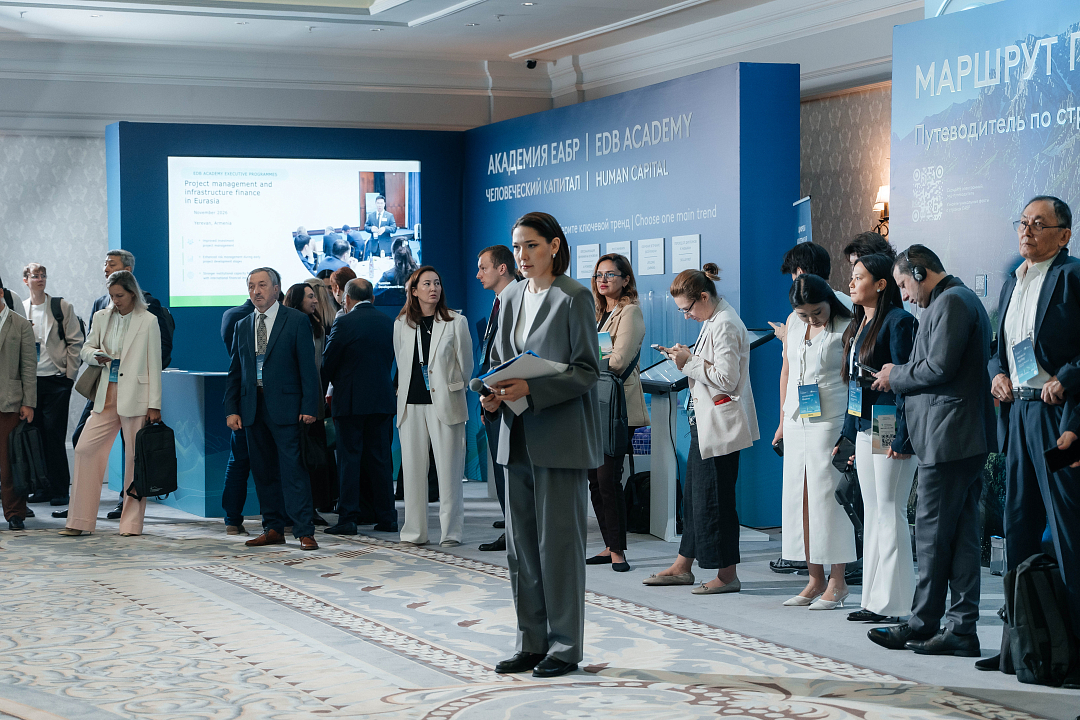
Almaty, June 26, 2026. On the sidelines of the EDB Annual Meeting, the Eurasian Development Bank, together with its international partners – Peking University, the Astana International Financial Centre (AIFC), the Green Investment Principles (GIP) Secretariat, the United Nations Economic and Social Commission for Asia and the Pacific (UNESCAP), and Coordinating Dispatch Centre ‘Energia’ – presented new research on public development finance, sustainable investment, energy cooperation, and the evolving role of multilateral development banks.
Energy in Central Asia: Modernization of the Energy Sector and the Energy Transition
This study was prepared by EDB experts with the participation of International Renewable Energy Agency (IRENA) in analyzing technological trends. Over the past decade, electricity consumption in Central Asia has increased by 37% and is projected to grow by an additional 27% by 2030. Critical wear and tear on energy assets, reaching 70%, dictates an urgent need for new mechanisms to modernize power systems. The report offers practical recommendations for the sustainable transformation of the industry.
Energy Without Borders: The Architecture of Energy Interconnectivity in Central Asia
A study prepared by the EDB in partnership with UN ESCAP and the ‘Energy’ Regional Center will outline the architecture of Central Asia’s future energy system. Regional integration serves as the foundation for the sector’s transformation. Cross-border electricity trade is no longer a secondary option but has become a fundamental prerequisite for a sustainable energy transition. Grid interconnection can eliminate seasonal shortages, improve supply reliability, and increase the inflow of innovation and capital.
“The main conclusion of both studies is the need for a ‘middle path’ in the energy sector – a balanced strategy in which the growth of renewable energy, the modernization of thermal power generation, market reforms, and the coordination of water-energy balances function as a single mechanism,” said Demir Kabylaev, senior analyst at the EDB’s Centre for Infrastructure and Industrial Research.
Financing Climate Adaptation in Central Asia: Capital Mobilization Tools and the Role of Multilateral Development Banks
The study was prepared by the EDB’s Center for Sustainable Development and the AIFC under the auspices of GIP. The global annual need for adaptation financing is estimated at $310–365 billion. Central Asia is one of the world’s most climate-vulnerable regions, and without adaptation measures, countries in the region could lose up to 9% of their GDP by 2050. The report covers issues such as enhancing the investment attractiveness of adaptation projects, the role of the state, new financial instruments, and the contribution of international financial institutions to the development of a market for adaptation solutions.
Empowering Public Development Financial Institutions Through AI
Public Development Finance Research Program at Peking University presented the inaugural issue of Public Development Finance Observer Series on the artificial intelligence (AI) empowerment of public development financial institutions (PDFIs). The report explores how PDFIs are beginning to deploy AI across four domains: inclusive and tailored access, operational execution, proactive risk management, and integrated knowledge management and institutional learning. Drawing on the latest development, the report shows that AI holds the potential for empowering PDFIs to better fulfill public policy objectives. However, evidence remains largely descriptive rather than evaluative. Governance risks—algorithmic bias, opacity, and potential exclusion—are clear. The report concludes that PDFIs should govern AI responsibly by building transparent data foundations, growing AI literacy across all staff, keeping humans accountable for consequential decisions, testing high-risk AI in regulatory sandboxes, and measuring effectiveness—not just efficiency.
Additional Information:
The Eurasian Development Bank (EDB) is a multilateral development bank investing in Eurasia. For 20 years, the Bank has worked to strengthen and expand economic ties and foster comprehensive development in its member countries. By the end of December 2025, the EDB’s cumulative portfolio comprised 326 projects with a total investment of $19.6 billion. Its portfolio consists principally of projects with an integration effect in transport infrastructure, digital systems, green energy, agriculture, manufacturing and mechanical engineering. The Bank adheres to the UN Sustainable Development Goals and ESG principles in its operations.
The EDB is implementing three mega-projects as part of its 2022–2026 Strategy: the Eurasian Transport Network, the Eurasian Agricultural Goods Distribution System and the Central Asian Water and Energy Complex.
The EDB Media Centre:
+7 (717) 255 84 84, ext. 4774, 2160