Investors Choose Predictability: EDB on What Drives and Hinders PPP in Eurasia
Almaty, June 26, 2026. — Public-private partnerships (PPP) continue to play an important role in infrastructure development across Eurasia. However, attracting private capital requires a clear regulatory environment, functioning PPP institutions, a developed domestic capital market, and high-quality project preparation. This was the key conclusion reached by participants at the session "Public-Private Partnerships: Unlocking the Investment Potential of Eurasia's Future," held as part of the Annual Meeting and Business Forum of the Eurasian Development Bank (EDB).
The PPP market in Eurasian countries is actively developing, but is at varying stages of maturity. Today, more than 10,000 PPP projects are being implemented in EDB member states. Successful projects with EDB participation include the construction and operation of the Big Almaty Ring Road (BAKAD) in Kazakhstan and the Bishkek Solar photovoltaic plant in Kyrgyzstan.
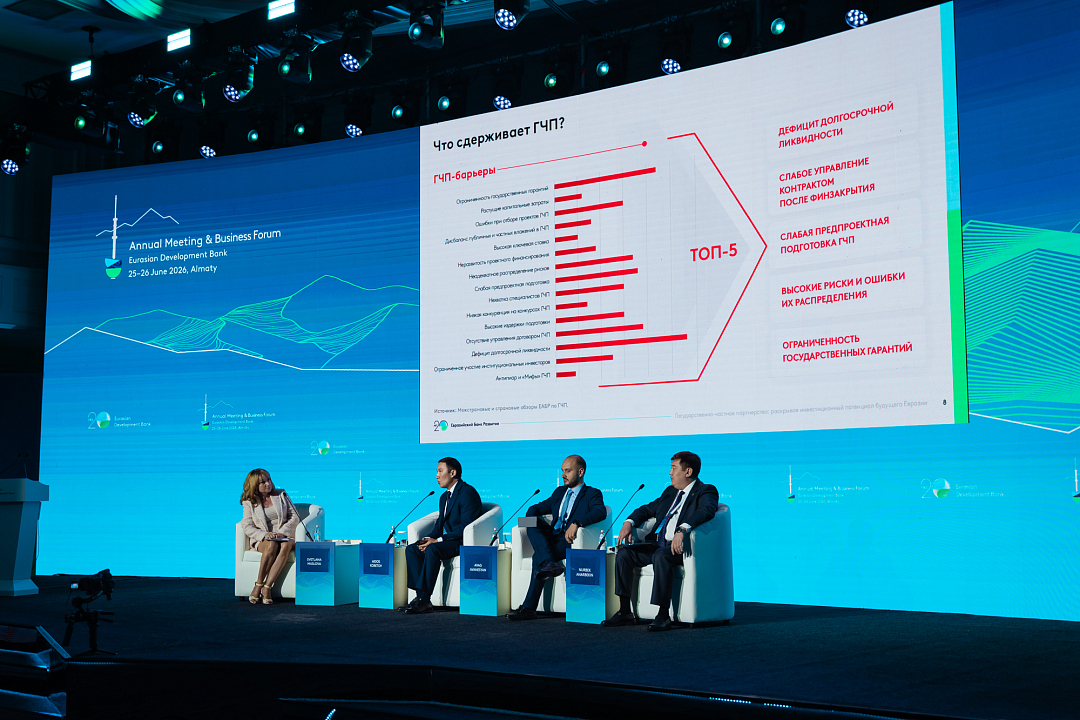
Session participants identified the main barriers to PPP development in Eurasia as: a shortage of long-term liquidity, insufficient project preparation at the pre-investment stage, errors in risk allocation, weak contract management after financial close, and limited government guarantee mechanisms.
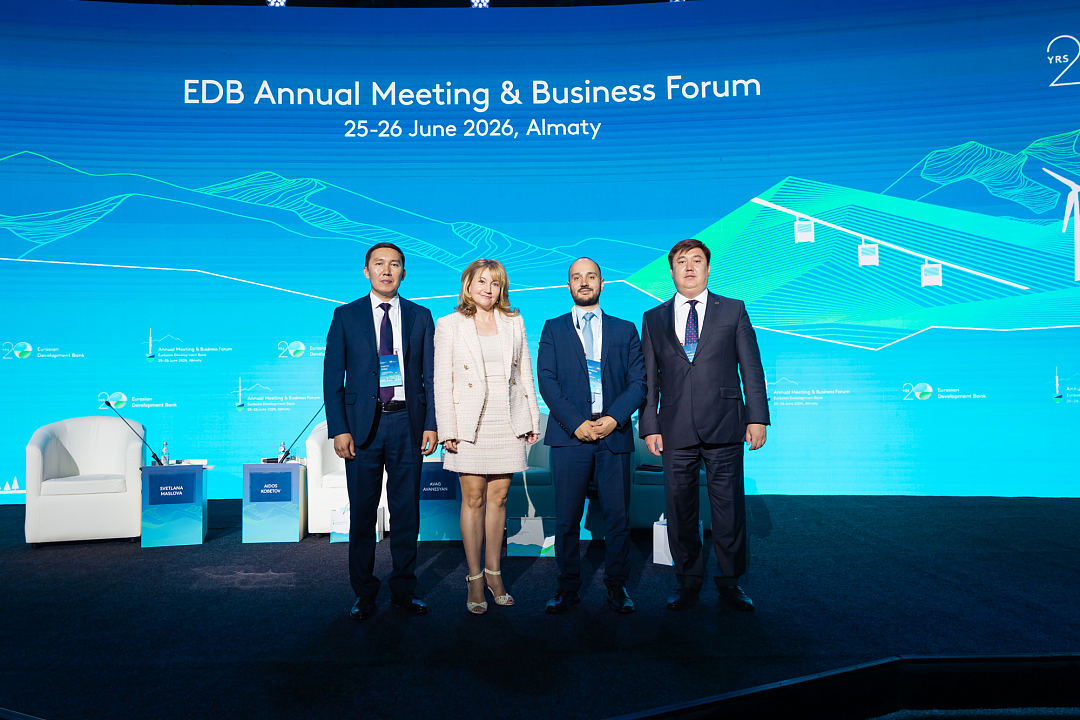
Avag Avanesyan, Deputy Minister of Finance of the Republic of Armenia and a distinguished guest of the session, emphasized the importance of creating predictable conditions for PPP project implementation. Armenia adopted its PPP law in 2019.
"Today, investors choose predictability over speed to market. Legislation must clearly protect their rights, fairly allocate risks, and guarantee stable rules throughout the project lifecycle. At the same time, it is important to avoid imbalance: weak protection deters investors, while excessive guarantees create fiscal risks without delivering real socio-economic benefits. The key challenge is to create a balanced institutional environment that serves the interests of both the state and business," — said Avag Avanesyan, Deputy Minister of Finance of the Republic of Armenia.
Aidos Kobetov, Deputy Chairman of the Management Board of the Kazakhstan PPP Centre, noted that balanced risk allocation is critical to the success of PPP projects.
"Investors should evaluate PPP projects not by the volume of government guarantees, but by the balance of risk allocation — that is what makes projects sustainable. Another important criterion: the project must create genuine public value. Without this, there will be no long-term effect, and such projects will sooner or later be revised or terminated," — emphasized Aidos Kobetov, Deputy Chairman of the Management Board of the Kazakhstan PPP Centre.
Nurbek Anarbekin, Director of the PPP Centre at the National Investment Agency under the President of the Kyrgyz Republic, highlighted the most dynamic PPP sectors in Kyrgyzstan.
"Kyrgyzstan has a clear trend toward projects involving the construction and modernization of markets and trade and logistics infrastructure. This segment is becoming one of the key drivers of PPP development in the country due to its high investment attractiveness, strong business demand, and transparent commercial model," — said Nurbek Anarbekin, Director of the PPP Centre at the National Investment Agency under the President of the Kyrgyz Republic.
The key drivers for further PPP market development identified during the discussion included: budgetary support for infrastructure projects, earlier involvement of banks in project preparation, introduction of standardized instruments and template documentation, development of a long-term project pipeline, and digitalization of project preparation and monitoring processes.
The EDB is building an institutional framework for successful PPPs. Beyond financing infrastructure projects, the EDB provides governments with expert and technical support aimed at improving PPP institutions, developing professional competencies, and introducing digital tools. The total volume of EDB support in this area has already exceeded USD 950,000.
Key initiatives include the establishment of a PPP Centre under the Ministry of Finance of Armenia, the launch of a specialized PPP web portal in Kazakhstan, the preparation of country PPP profiles, and practical training events for professionals involved in PPP project preparation and implementation.
"A successful PPP project begins long before financing is secured. We follow an upstream preparation approach: first, we build the foundation. At this stage, we assess the project concept against national strategy and infrastructure needs, analyze the regulatory environment, allocate risks, and form a project team. Only then do we move on to the financial model and documentation. This approach reduces the risk of future failures and improves the quality of infrastructure initiatives across Eurasia," — said Svetlana Maslova, Director of PPP Projects at the EDB.
Additional Information:
The Eurasian Development Bank (EDB) is a multilateral development bank investing in Eurasia. For 20 years, the Bank has worked to strengthen and expand economic ties and foster comprehensive development in its member countries. By the end of December 2025, the EDB’s cumulative portfolio comprised 326 projects with a total investment of US $19,6 billion. Its portfolio consists principally of projects with an integration effect in transport infrastructure, digital systems, green energy, agriculture, manufacturing and mechanical engineering. The Bank adheres to the UN Sustainable Development Goals and ESG principles in its operations.
The EDB is implementing three mega-projects as part of its 2022–2026 Strategy: the Eurasian Transport Network, the Eurasian Agricultural Goods Distribution System and the Central Asian Water and Energy Complex.
The EDB Media Centre:
+7 (717) 255 84 84, ext. 4774, 2160