EDB Emphasizes the Critical Role of Development Banks in Standardization of Islamic Finance at ADFW
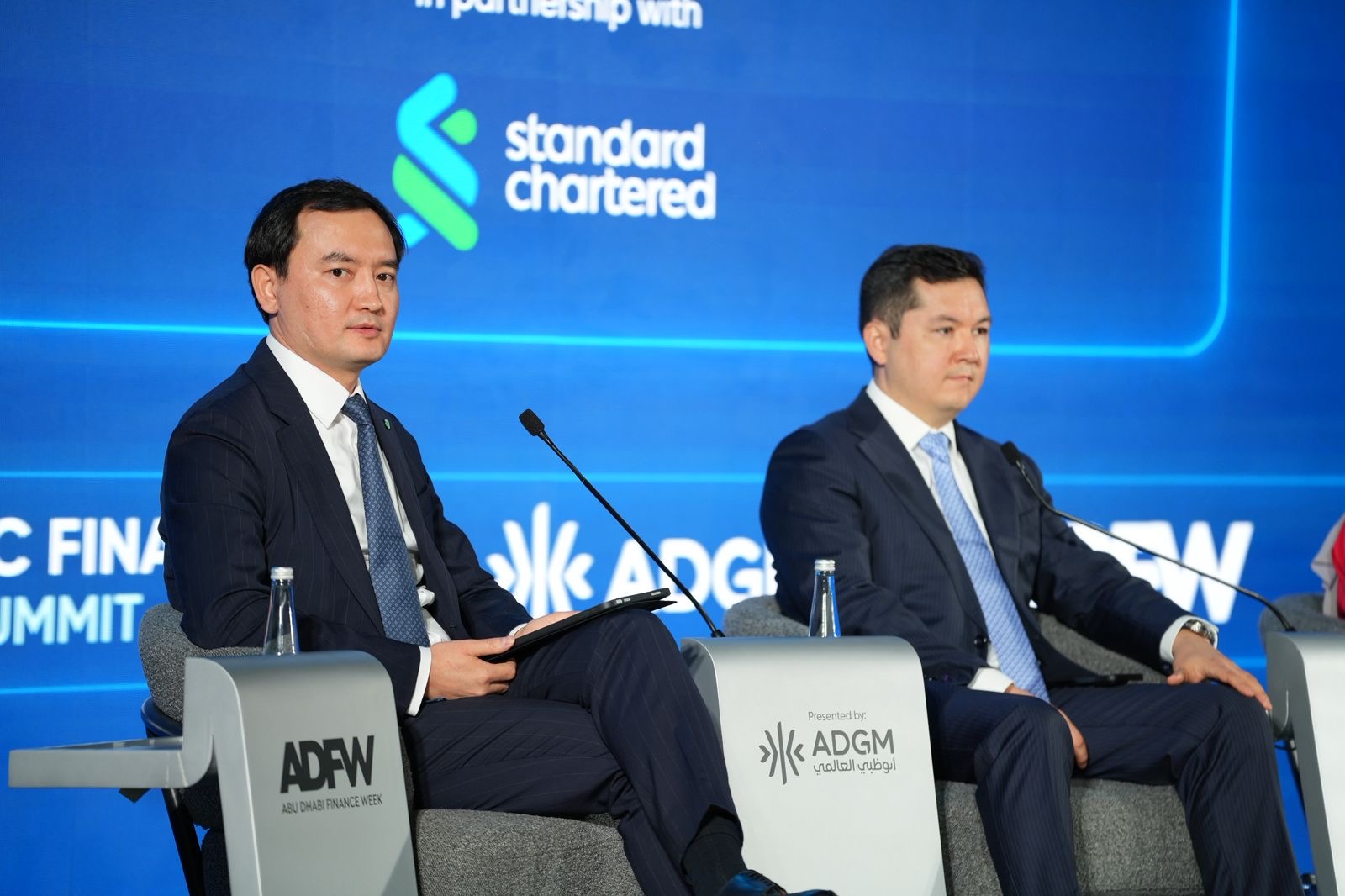
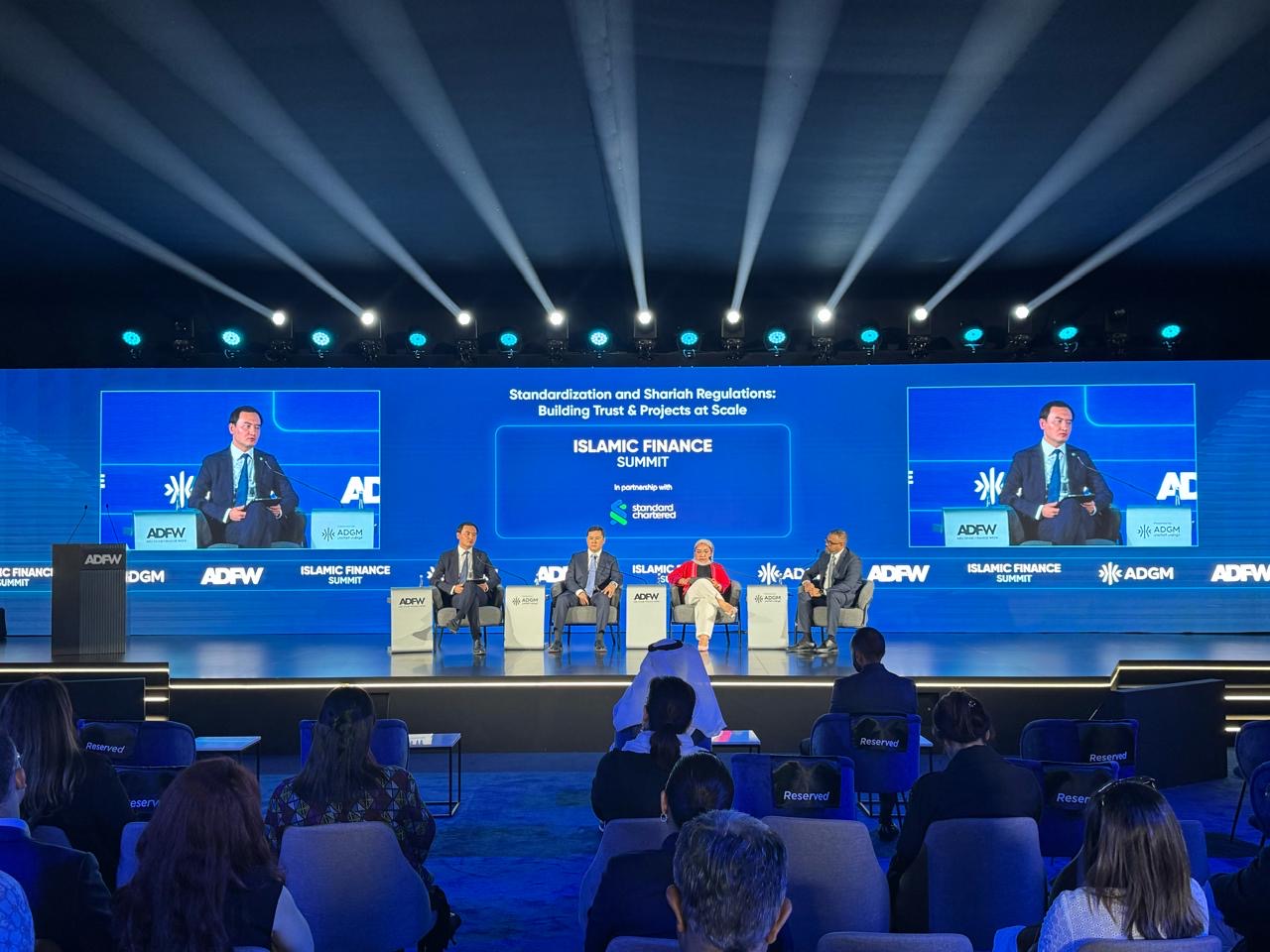
ABU DHABI, 12 December 2025 — Azamat Tyuleubay, Senior Managing Director at the Eurasian Development Bank (EDB), joined industry leaders at Abu Dhabi Finance Week’s Summit for a high-level discussion on advancing Shariah standardization and regulatory alignment across global markets.
Moderated by Osama Ali, Director of Programs & Accreditation at ADGM Academy, the panel featured Azamat Tyuleubay – Senior Managing Director, EDB (Kazakhstan), Renat Bekturov – Governor, Astana International Financial Centre (Kazakhstan), andArifa A. Ala – Assistant Governor, Central Bank of the Philippines.
The session examined opportunities to align Shariah standards, strengthen regulatory consistency, and unlock cross-border Islamic finance markets worldwide.
EDB Emphasizes the Critical Role of Development Banks in Standardization
During the discussion, Azamat Tyuleubay outlined how multilateral development banks can serve as catalysts for harmonization and innovation across borders. Addressing the opening question on the role of development institutions in supporting consistent Shariah practices, he highlighted fragmentation as one of the most significant challenges in Central Asia:
“As Islamic finance expands across regions, one of the biggest challenges we face—particularly in Central Asia—is fragmentation. Different interpretations, legal frameworks, and operational standards create uncertainty and affect investment flows. We need to bring the region closer to globally recognized standards and norms.”
He also referenced the joint report issued by EDB, the IsDB Institute, and the London Stock Exchange Group, “The Future of Islamic Finance in Central Asia” (2025), which reinforces the importance of regulatory alignment, market capacity, and practical implementation.
Strengthening Collaboration to Streamline Shariah Oversight
In addressing how MDBs can support regulators and standard-setting bodies, Mr. Tyuleubay noted:
“Because development banks operate across multiple jurisdictions, they see both the similarities and differences in Shariah governance systems. They can guide alignment by creating structured platforms for dialogue between regulators, scholars, AAOIFI, IFSB, and market participants.”
He noted that coordinated frameworks, standardized documentation, and pilot transactions under unified Shariah guidelines can significantly reduce duplication and contradictory rulings:
“MDBs are more than financing institutions—they are catalysts for integration, standardization, and greater credibility in Islamic finance.”
In closing, the panel emphasized that cooperation between regulators, development banks, and global standard-setting bodies will shape the next phase of Islamic finance development.
Additional Information:
The Eurasian Development Bank (EDB) is a multilateral development bank investing in Eurasia. For more than 19 years, the Bank has worked to strengthen and expand economic ties and foster comprehensive development in its member countries. By july 2025, the EDB’s cumulative portfolio comprised 319 projects with a total investment of US $19,1 billion. Its portfolio consists principally of projects with an integration effect in transport infrastructure, digital systems, green energy, agriculture, manufacturing and mechanical engineering. The Bank adheres to the UN Sustainable Development Goals and ESG principles in its operations.
The EDB is implementing three mega-projects as part of its 2022–2026 Strategy: The Eurasian Transport Network, the Eurasian Agricultural Goods Distribution System and the Central Asian Water and Energy Complex.
The EDB Media Centre:
+7 (717) 255 84 84, ext. 2160, 4774