
Capacity Building by Multilateral Development Banks: Cases and Key Features of Training Initiatives
-
Report
PDF, 3.08 Mb -
Summary
PDF, 1.27 Mb -
Key findings
PDF, 743.16 Kb -
Presentation
PDF, 2.04 Mb
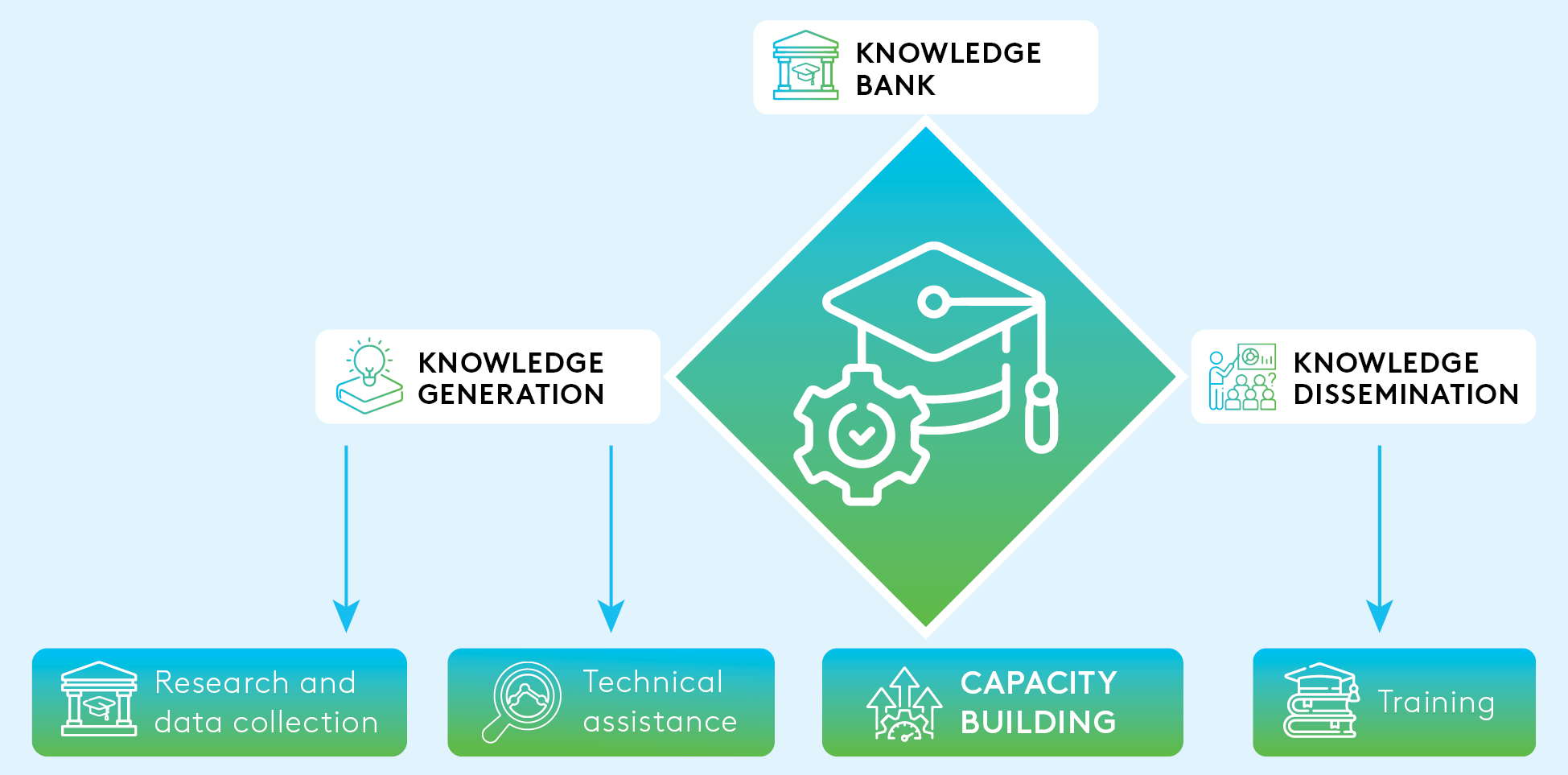
Multilateral development banks (MDBs) are increasingly serving as learning centers. Through their lending and analytical work, MDBs accumulate unique operational and policy knowledge, which training initiatives help transfer to borrowing countries, development partners, and wider audiences.
Figure 1. MDB as a knowledge bank
Source: EDB
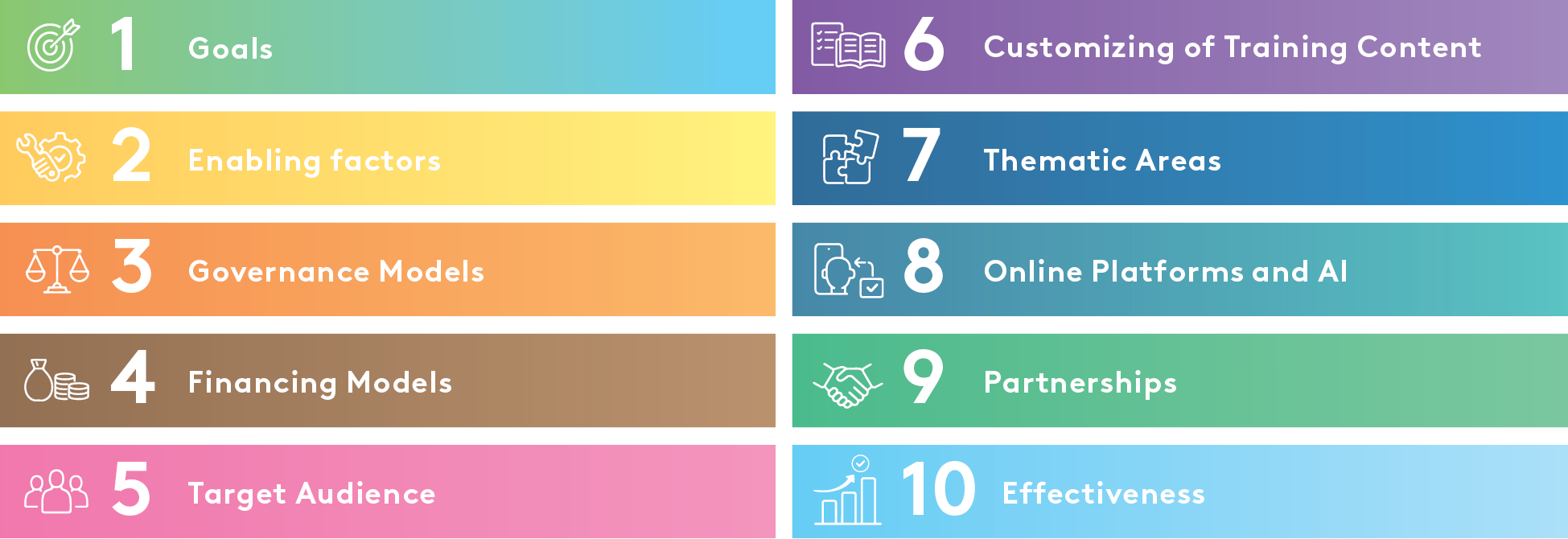
The report describes training initiatives of the 14 development institutions, including the World Bank, Asian Development Bank, Development Bank of Latin America and the Caribbean, Eurasian Development Bank, Central Asian Regional Economic Cooperation Programme, International Monetary Fund, and others. It features a systematic analysis of these initiatives, including their goals, enabling factors, governance and financing models, target audiences, thematic areas, online platforms and AI integration, partnerships, and measures of effectiveness.
Figure 2. Key issues
Source: EDB
Long-term Development Perspective
Influenced by technological, social, and economic factors, the educational activities of MDBs will undergo transformation. In a 10-year perspective, educational initiatives are likely to be perceived not as a supporting tool but as a key non-investment activity.
- MDBs will increasingly create open-access educational resources. New technologies will help reduce production costs.
- Educational online platforms, AI (including AI assistants), and VR/AR will become key components of this evolution. The use of AI will enable the development of adaptive formats for learning process customization.
- Collaboration with educational institutions and EdTech platforms (such as Coursera, edX, etc.) will enrich MDBs initiatives. Universities and EdTech platforms serve as channels for accessing regional and global audiences. This is likely to lead to an expansion of cooperation between MDBs and such organizations.
- MDBs will enhance the effectiveness of their courses through localization and cultural adaptation, providing content in national languages and tailoring materials to the institutional characteristics of different regions.
- Collaboration among MDBs represents a significant opportunity for development. Joint initiatives aimed at capacity building will yield greater impact, reduce duplication, and strengthen the development ecosystem across various countries.
- Deep integration with projects and national programs will make MDBs training courses an essential part of credit and grant projects. They may also be included in national professional development programs for public servants.
- MDBs will shift towards quantitative assessment of program effectiveness. New technologies will assist in developing evaluation systems and reallocating resources between offline and online formats.
- The number of courses dedicated to soft skills will increase. Communication, interpersonal, and leadership skills are essential for the successful implementation of MDB’s projects.
- Educational events can be utilized to disseminate and establish international norms and standards. Development projects require fewer resources from MDBs when clients adhere to unified rules.
- MDBs will support alumni communities to enhance the impact of their programs.